Solar Opposites Final Season Review
It was a fun ride while it lasted, but after five years, six seasons, and four specials, Solar Opposites has come to an end. It’s a bittersweet feeling knowing that one of Hulu’s best original animated series is over, but there comes a time when things have to come to an end. Given everything that it was up against, though, it’s kind of amazing that it’s lasted as long as it has. It started out being overshadowed by Co-creator Justin Roiland’s more famous show, Rick and Morty. Then, it was marred by the controversy brought about by the allegations against Roiland himself. Either one could’ve ensured Solar Opposites suffered a premature end, but I weathered both of them. Now, it’s got its own dedicated fanbase and identity and all the better for it. But did this final season manage to land on its feet?
Honestly, yes.
The Solar Opposites Took a Lot of Attention
In the past, I have normally spent the better part of my reviews focusing on the secondary plots, AKA The Wall and the Silvercops. However, a big part of this final season is also one that surprised me the most: the episodic plots felt better than the serialized stuff this time around.
Don’t get me wrong, I have always enjoyed seeing whatever it is the Solar Opposites are doing each episode. With the lion’s share of the serialized elements reserved for things like The Wall, though, most of the things the Solar Opposites do tend to be one-off. Story elements do carry over from past episodes, but everything still feels self-contained. Since this is the final season, though, it feels like the showrunners wanted to give everyone as satisfying a conclusion as possible. They requires character growth, and that requires more serialized storytelling. And the season starts off on a very strong note, with the first episode seeing most of the machines the Solar Opposites use to make money getting destroyed.
The Solar Opposites Grow as a Family
Without the ability to make diamonds and other forms of cash, the Solar Opposites are forced to buckle down and start making changes to their lifestyles. They have to sell most of their tech just to get by, meaning they can’t bail themselves out as much anymore, and have to adapt to Earth more than ever. This isn’t the first time that they’ve had to do so, but what makes this different from the Season Three finale is that this time, they really can’t fall back on their sci-fi tech. Ironically, by pushing themselves outside their safety net, the Solar Opposites are able to thrive like never before. Yumulack and Jesse have to start applying themselves at school, and they discover that they’re geniuses. So much so that they’re able to become the best students at school and co-student council presidents. Terry, after a stint loving romantasy novels (and meeting the fairies who write them), he starts writing his own, and they do so well, they become best-sellers! He even manages to get them made into blockbuster films by the end of the series!
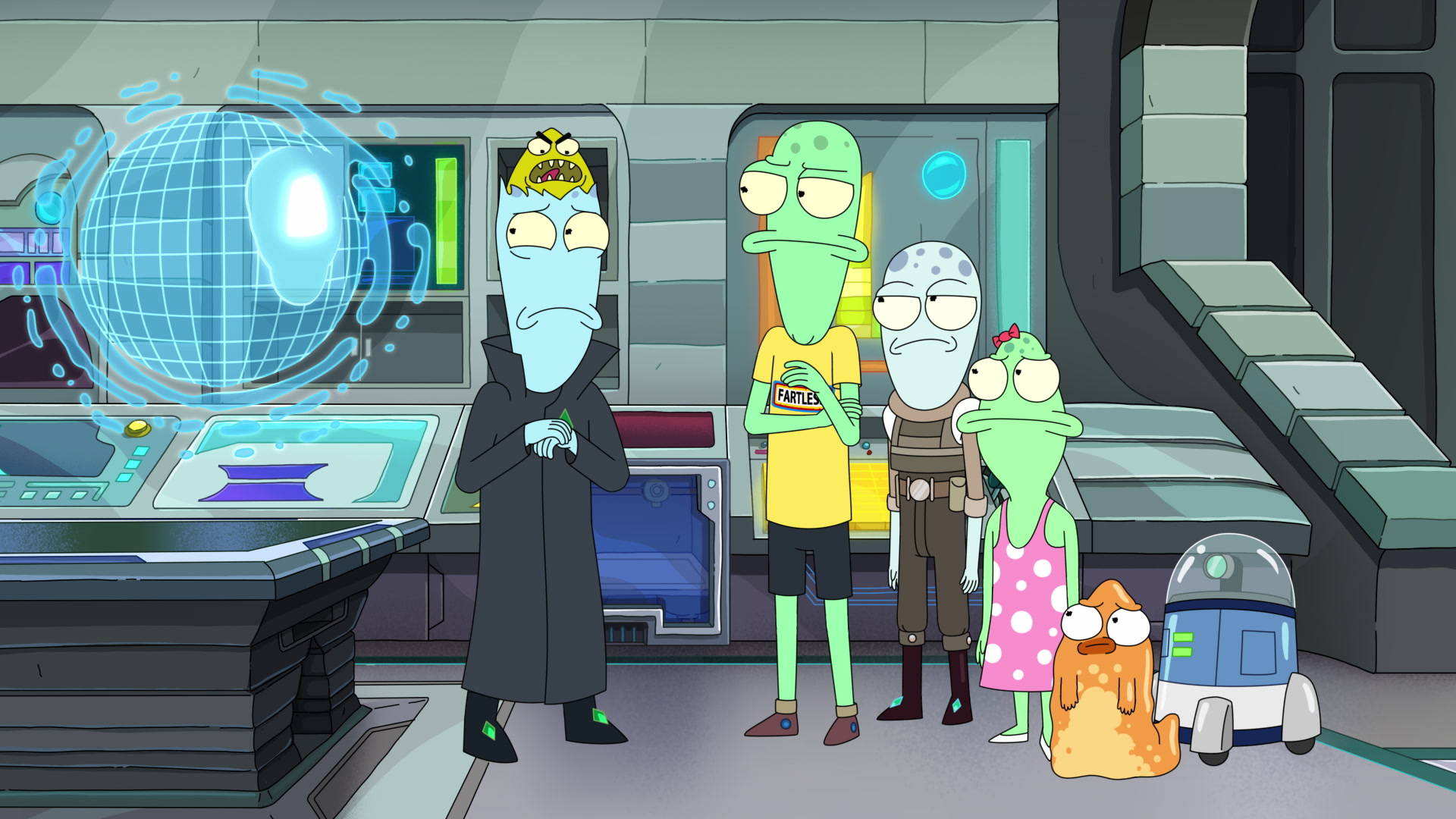
Yet all of that pales in comparison to the character growth showcased by Korvo, and it starts with the return of their old CO, Commander Zarck.
Korvo Has Come into his Own
For those who don’t know, Zarck was the one originally supposed to be in charge of the mission, but to prove to everyone how badly they needed him, he used a machine to erase their memories of him. By the time they remember him and he returns at the start of the season, they’ve all but gone native. Yet Zarck’s return forces Korvo to step and prove once and for all that he’s the better team leader while Zarck doesn’t play much of a role afterwards. It shows just how much Korvo has come into his own as a leader and a character. Yet even that is overshadowed by what is the culmination of Korvo’s entire arc throughout the show. When the Pupa starts to prematurely terraform the Earth, Korvo makes the decision to destroy its means of doing so, making it so that they can never fulfill their mission. The Korvo of Season One wouldn’t have hesitated to let the process go through, but he’s grown to love Earth just as much as his adoptive family has. That’s some good character development.
It also turns out that Korvo made the right decision, not just for Earth, but for all Shlorpians everywhere.
What a Twist with the Silvercops!
Throughout the final season, one sub-plot that remains largely on the sidelines is that of Glen and the Silvercops. Last season, Glen joined the Goldcops to go undercover in the Silvercops to bring them down. This leads into the series finale where Glen (now called Dodge) returns to Earth with the Silvercops where we get the biggest twist in the entire series: the Silvercops created the Shlorpians!
For centuries, the Silvercops had been manufacturing Pupas and using them to create Planet Shlorps that they could then destroy. While the Shlorpians would go out and terraform other worlds, they would harvest the resources for money. It’s an intergalactic scam that’s killed countless people and made the Shlorpians the most hated beings in the galaxy!
This was a really good twist. Not only did it reveal that the Solar Opposites did the right thing by defying their mission, but it reframes everything that happens throughout the series. And in the end, Dodge and Goldcops are able to shut the Silvercops down for good, thereby freeing Shlorpians everywhere and the Solar Opposites to be a family. Even better, Korvo gets to travel the galaxy and tell other Shlorpians they can forget the mission and chill. It’s a happy ending for everyone!
At least until the Earth gets destroyed by the Wallians 90 years in the future.
The Wall Stumbled at the End there
From day one, I’ve kept saying that my favorite part of Solar Opposites has been the story of The Wall. For many fans, it was their favorite part of the series. The show took this silly idea of a bunch of shrunken down people living in a terrarium and turned it into this epic that spanned the entire show. At it’s best, The Wall felt like watching Game of Thrones at the peak of its writing. Ironically, though, I can’t help but feel that, much like Game of Thrones, The Wall stumbled on the last lap.
After the events in The Backyard from last season, Cherie decided to stop running from power and just take the reins of The Wall as its Queen. The implication was that Cherie was going to turn into the same kind of tyrant that she spent the entire show fighting against, but much to my surprise, that never really manifests. Especially since two big developments take place: Ringo, AKA the Duke, comes back, having been returned from the dead by the Solar Opposites, and the Wallians unite for the sole purpose of getting the shrink ray from Yumulack. But despite this interesting premise and getting to see Ringo come to terms with his past, none of the new characters from last season return or have any impact on what happens. Having grown to appreciate these newcomers for what they added, it feels a little jarring not to have them in this grand finale.
Cherie Continues to Make Mistakes
I will say this about the end to The Wall story, though: it’s final act shows us how much Cherie has grown as a character throughout the show, and not for the better. During their mission to get the shrink ray, in a moment of vulnerability, Cherie admits that she no longer cares about the other Wallians. All she cares about is protecting Pezlie. This leads to the saddest twist of the entire story; after blackmailing Yumyulack into restoring everyone to normal size, it’s revealed that doing so would end up killing Pezlie. Thus, her team decides to stay small and not tell anyone the truth while forcing Yumulack to make The Wall a better place.
Cherie. Good Intentions, but Doesn’t Think Things Through
This is some pretty good character development on the part of the show. After spending most of her story fighting against tyrants and deception, Cherie winds up becoming that what she fought against. She chooses to lie to everyone about being able to return to normal so that Pezlie won’t be alone in the world. It’s a selfish decision, and one that the distant epilogue shows will ultimately end in most of the world being destroyed. Yet at the same time, you can’t help but understand where Cherie is coming from. She’s just trying to be a good mom to her daughter and give her the best life she can have.
As is the case in real life, things like this can lead people to make selfish decisions that benefit no one but themselves. Yet this isn’t something that’s coming out of nowhere, either. It was shown back in Season Four that Cherie was willing to bend her ideals if it meant protecting her daughter, even if that could lead to other people getting hurt. And, as we come to see, it winds up destroying everything in the future. I don’t know about you guys, but knowing that the world winds up getting destroyed kind of makes the happy ending of the finale feel pointless. Not only do I not like downer endings, but I don’t like happy-ending overrides. In other words, Solar Opposites hit two of my pet peeves.
I’ll Miss You, Solar Opposites!
Despite all of this, though, I still think that Solar Opposites managed to end things on a high note. I think that the series was fun from start to finish, and I’ve already started rewatching some of the older episodes. It’s just that good! More importantly, though, this is the show that introduced me to the work of Mike McMahan, who helped to create my favorite Star Trek series, Lower Decks. I never would’ve gotten into that show had it not been for Solar Opposites! So for a show that started out in the shadow of Rick and Morty, I’d say that Solar Opposites has created something all its own. Not bad for a bunch of weird plant aliens.