‘Turning Red’ Is One of the Best Pixar Movies in Years
Turning Red Review
For as long as I’ve been alive, there’s always been Pixar. Some of my earliest memories were of watching the original Toy Story on the family VHS, and that love has carried well into my adulthood. However, there came a time when I started to question if their films were getting a little repetitive. I even said in my review of Onward that maybe Pixar should mix things up a little. Then, we got this quirky, amazingly fun, heartwarming movie called Turning Red.
Calling Turning Red a great movie would be an understatement; it is probably the best movie that Pixar’s given us in years. This movie has amazing story to tell about the challenges of growing up, which in and of itself is not unique. What sets this film apart from the normal Pixar film is that the film seems to intentionally break the Pixar Formula. In fact, when you think about it, Turning Red might be a metaphor about the new direction that Pixar wants to take, one where they don’t want to conform so strictly to their old rules.
Growing Up is a Beast
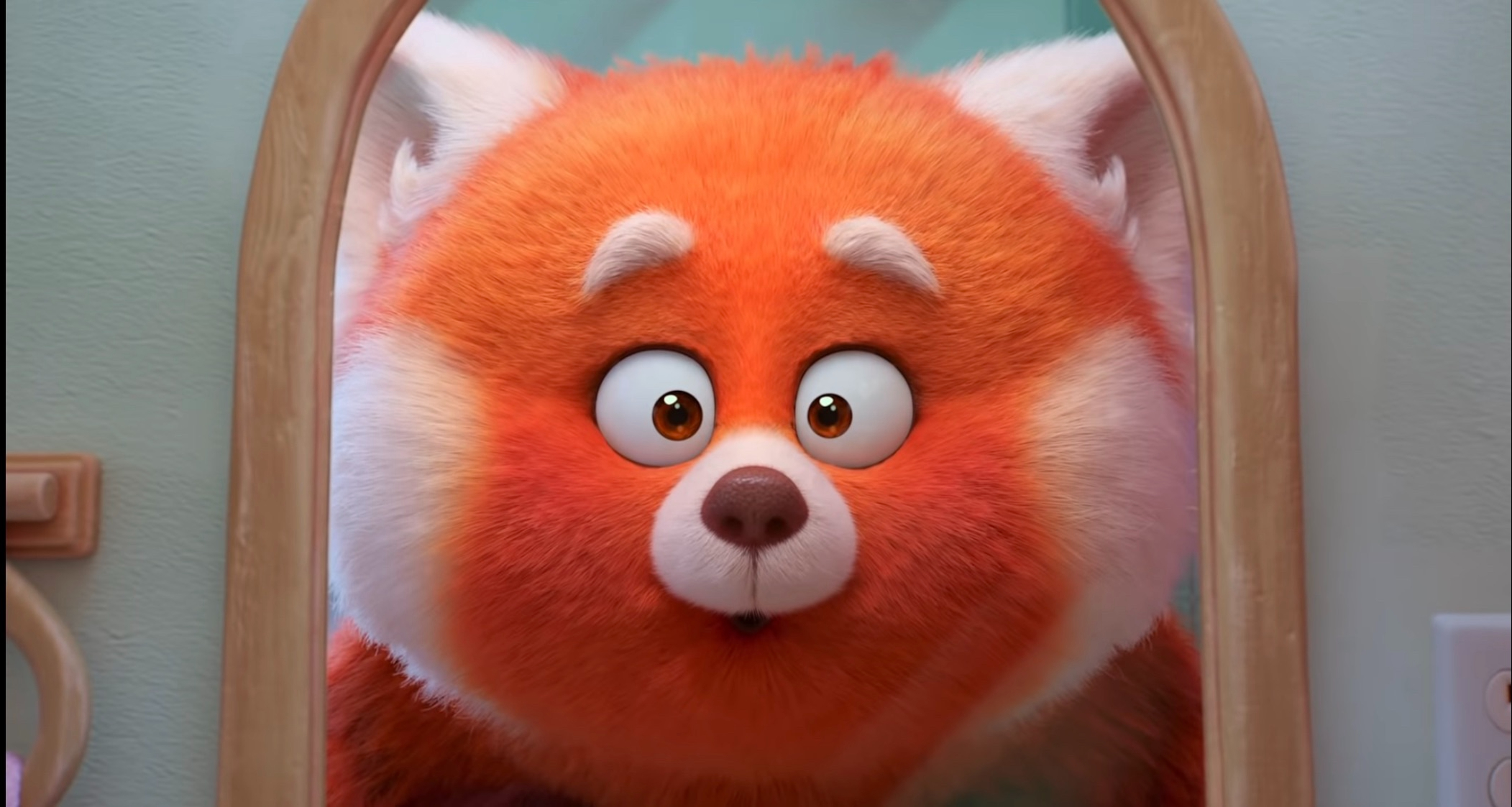
Set in Toronto, Canada at the turn of the new millennium, Turning Red is about Meilin “Mei” Lee, a Chinese-Canadian girl who just turned 13. All her life, she’s tried to be the perfect daughter that her loving, but crazy strict, mom wants her to be. Only, becoming a teenager means discovering new things about yourself and possibly rebelling against your parents. And the night after her Helicopter Mama humiliates her in public, she wakes up…to find she’s a giant, red panda.
From the moment I first saw the teaser, I knew that this was going to be a brilliant concept. A 13-year-old girl going through the stresses of puberty, made only worse by how over the top her Mom’s efforts to protect her are. The red panda is a genius metaphor for how our emotions can run wild at that age, bringing out the beast within. In Mei’s case, quite literally. But whereas some people might treat it like a curse or, as her Mom puts it, “an inconvenience,” Mei comes to realize that it doesn’t have to be.


Growing up can be painful and lead to us doing things that our elders may not approve of, but Mei realizes that she likes the person that she’s turning into. I mean, she can turn into a giant, fluffy red panda at will. That’s a really cool power to have, and everyone her age seems to think so. The only ones taking issue are her elders, specifically her Mom. To her, becoming a red panda was a traumatizing event that stunted her emotional growth, and she can’t understand why her daughter would enjoy it, driving the conflict of the film. Therein lies its brilliance.
Turning Red Breaks the Pixar Formula, and is all the Better for It
Granted, it feels like Pixar did something similar to Turning Red in the form of Brave years ago, what with the feud between the Mother and Daughter. However, it’s different from Brave. In fact, Turning Red is different from almost every Pixar movie that’s preceded it, because it breaks the studio’s MO for universal storytelling.

Pixar rose to the top by telling stories that have universal themes to them that all ages can relate to. Yet Turning Red does the exact opposite, telling a story about a specific group of people, teenage girls, and what they can go through during puberty. It’s not something that everyone can universally can relate to. Yet look on the Internet, and you’ll see almost everyone praising the film for doing this.
Like I said in my Onward review, the Pixar Formula may be losing its luster a little, and the studio should mix things up to stay fresh. In this way, having a film about a specific group of people can be seen as a metaphor for their desire to try new kinds of stories. Stories that don’t conform to the rules set by their elders. When you look at it like that, it only makes Turning Red even more brilliant. It showcases the conflict and resolution of what came before with what the future holds in store.
Definitely a Must-Watch
Whether you’ve been a fan of Pixar since the early days, a parent with kids who will beg you to watch this with them, or just someone who appreciates animation, Turning Red is a movie you shouldn’t sleep on. It’s one of Pixar’s best movies in years, and one that I will want to go back and watch several times over. I highly recommend watching it on Disney+, you guys. If this is the new direction Pixar wants to take, then I think their future’s looking bright.
I Give Turning Red a 5/5
Onward to the Movies
As I was leaving the movie theater after seeing Pixar’s new movie ”Onward”, I realized something. As of this November, Pixar’s been making movies for 25 years! My mind was blown, but that didn’t stop me from trying to review Onward as fairly as possible.
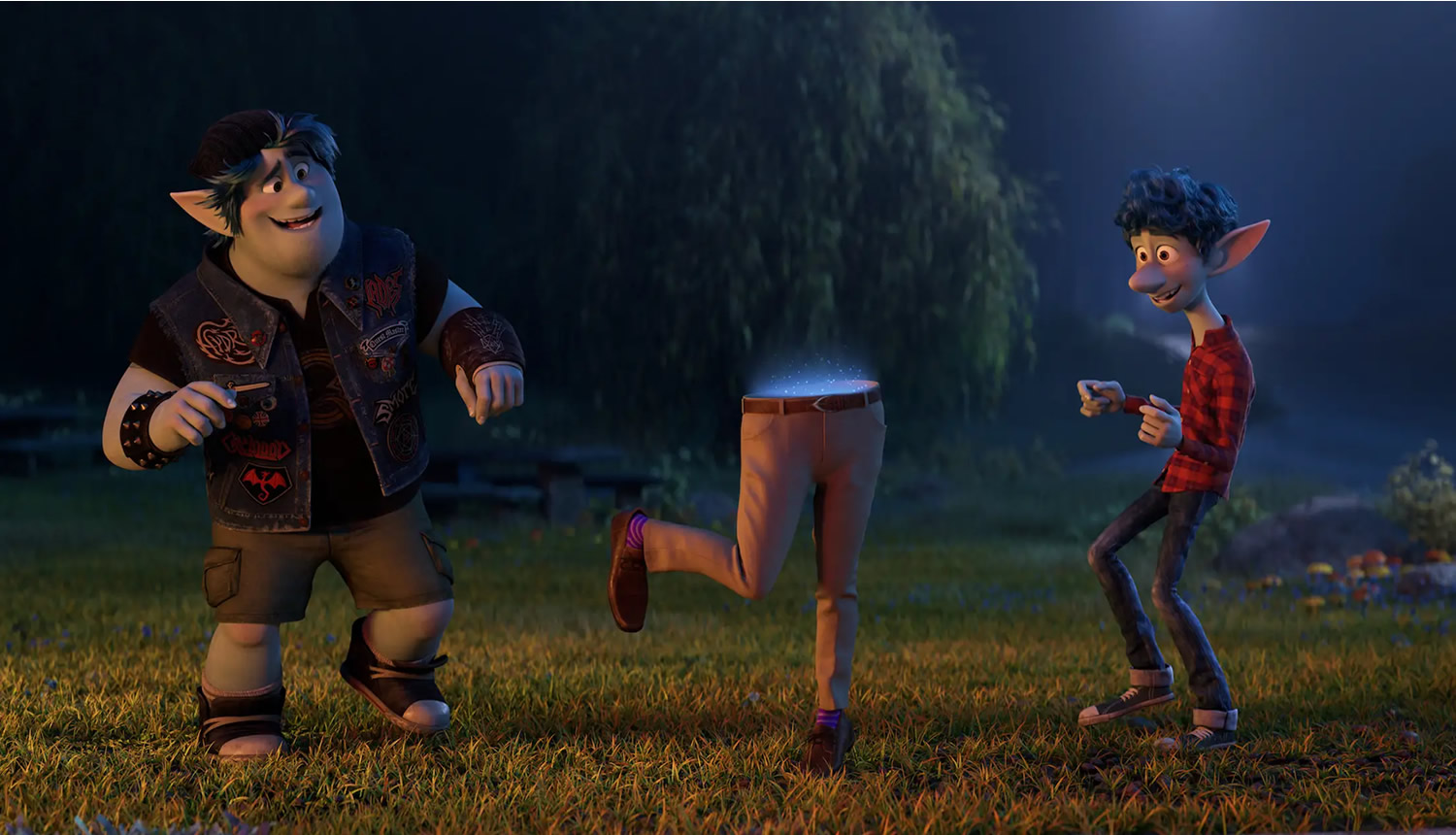
Taking place in a world populated by magical creatures, the world of Onward was once filled with magic-wielders. Then came the conveniences of modern-life, so people stopped using magic. All that changes, though, when a young elf named Ian Lightfoot receives an old wizard’s staff as a gift from his late father. Using the magic of the staff, Ian tries to bring his dad back for a day so he can finally meet him. When the spell’s incomplete, though, Ian and his boisterous older brother Barley set out on a quest to finish the spell so they can see their dad again.
Chris and Tom are Awesome

The heart and soul of the film come from the Lightfoot brothers, Ian and Barley. The two are almost polar-opposites in terms of personality, so the two have a good dynamic throughout the film. Ian’s soft-spoken, shy, and insecure about himself, whereas Barley’s loud, boisterous, and charges headlong without thinking things through.
It helps that Ian and Barley are played by Tom Holland and Chris Pratt, respectively. Considering how they worked together in the MCU, it makes sense that they know how to play off each other’s strengths. Tom brings his eager youthfulness as Ian, while Chris lets his most bombastic characteristics shine. They balance each other out, and their relationship drives the film to its climax.
A Story about Familial Bonds
While the trailers for the film make it seem like Onward is about Ian bonding with the dad he never knew, that’s a little misleading. The real story is about the bond between Ian and Barley and how much sibling relationships can mean for a person’s development. According to director Dan Scanlon, Onward was inspired by the fact that his own dad died when he was a baby, so he never knew him. Yet his older brother always remained supportive of him growing up, encouraging his talents and showing off what he could do.
Then one day, he was talking with a friend at Pixar, and she dropped a huge bombshell about why he never missed his dad: because his brother had been his father figure. And like Dan, Ian undergoes that same realization near the end of the film. It’s a real emotional message on how much the bonds we make growing up can make us into the people we become, and Ian becomes a better person as a result. He becomes much more confident in himself, outgoing, and his bond with Barley becomes stronger than ever.
The Good Old Pixar Formula
I’ve seen enough Pixar films to know that there’s a standard formula to them. The film starts off with some sort of conflict occurring, and the protagonist has to resolve said conflict. So they have to go on some sort of journey that changes them or the people around them as people. Then there comes the moment where they hit rock bottom and we all cry. From there, the hero gains a new will to move onward, and they resolve the conflict.
I’m pleased to say that Onward manages to follow this formula to a tee. While that would normally be a problem, it actually isn’t in this case. Pixar’s been the media giant it’s been for the last twenty-five years because of that winning formula. It works to the point where even their less-than-desirable films do well in the box office.
That said, I can’t help but feel that the Pixar Formula’s getting a little stale. Maybe Onward is a sign that they should consider mixing it up a little in the future to stay fresh. Or don’t; what do I know?
A Fun Time at the Movies
So, Onward is a good film. It’s got a solid story and great casting behind it, and the inspiration tugs at one’s heartstrings. That said, it doesn’t seem to have the same spark that all the classic Pixar films have. It’s a great movie, but I wouldn’t put it in my top five films that Pixar’s done.
If you’re a fan of any of the following though:
- Dungeons and Dragons
- Pixar
- Mystical Creatures
- Chris Pratt
- Tom Holland
Then I’d recommend you go see. It’s a nice testament to the power of brotherly love and has some pretty funny moments to it.
I Give “Onward” A 3.5/5
Click here to see my reviews for various films.
Toy Story Does It Again
Toy Story 4 Review
Mention the words “Toy Story” to a lot of millennial’s today, and they’ll probably respond with nothing but praise and affection; myself included. Watching Toy Story on VHS is one of my earliest childhood memories. I consider Toy Story 2 to be one of my all-time favorite movies. Plus it gave us this scene:
I never get tired of that. For all my love of Toy Story, though, I never saw Toy Story 3 in its entirety. I was too sad about it being the end to see it in theaters (note to self: watch it this summer). Then out of the blue, Pixar gave us another Toy Story film this summer. While experience has taught me that this could potentially be a shameless cash grab, I decided to give it the benefit of the doubt. It is Pixar, after all. After going to see the new Toy Story 4, I’m pleased to say that it is no cash grab.
Quick Plot 101
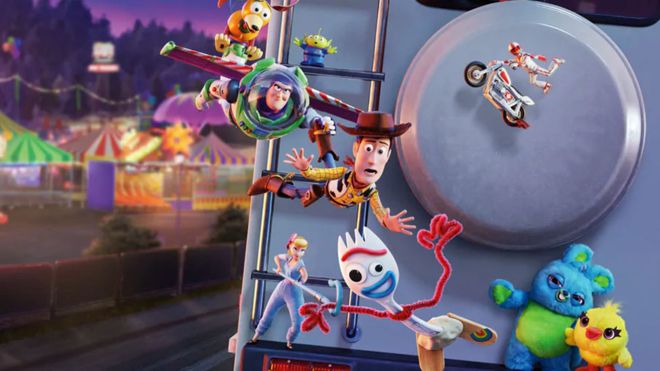
It’s been two years since Andy’s toys got adopted by Bonnie, and they’ve settled into their new lives pretty well. Woody’s being neglected by Bonnie for weeks now, something that bugs him more than he’d care to admit. When Bonnie comes home from her kindergarten orientation with Forky, a toy spork she made with trash, Woody takes it upon himself to look after Bonnie’s new favorite toy. As we see in the trailers, Forky doesn’t want to cooperate, leaving the two stranded while on a road trip. As Woody tries to get them home to Bonnie, he ends up running into his old sweetheart, Bo Peep, whose post-Andy life makes him reconsider his purpose as a toy.
Now that that’s out of the way let’s get to the meat of this review: what I loved, and what to nitpick.
The Spectacular
Forky Is our Spirit Toy
The Internet has spoken, and it adores Forky! The Toy Story 4 website describes him as the kind of toy that only a kid who spent twenty minutes making him would love. That’s accurate for the newest toy in Bonnie’s room. Of course, that’s Forky’s main problem: he’s not a toy, and he knows it. The other toys realize it, too, but they support him in his new life anyway. Forky wants nothing to do with them, though, and insists that he’s trash, and tries several times to throw himself out.

While annoying at first, Forky reveals his obsession with trash is because it’s his comfort zone. It’s what he remembers from before being a toy, and it’s warm and comforting to him. It’s like his security blanket, and he’s not ready to part with it.
At a crucial point in the film, Woody uses Forky’s love of trash to get through to him finally: he makes Bonnie happy the same way garbage makes him happy. Once that realization hits, Forky begins to embrace his life as a toy and his newfound purpose.

I can see why everyone loves Forky so much: he’s an insecure fish out of water that’s thrown out of his comfort zone, and that’s scary for most people. He tries to reject his new circumstances in life, but as time goes on, he learns to embrace them and starts forming an actual personality. He’s kind-hearted, naive, friendly to other toys, and has a mischievous streak that we can’t help but smile at. He also proves to be insightful, as he picks up that Woody hasn’t gotten over Andy.
Woody’s Character Growth
Remember how jealous Woody was of Buzz in the first film, and how much trouble that put the two of them in Toy Story? As if coming full circle, this film puts him in a very similar set of circumstances: his favorite toy status gets replaced by Forky. Thankfully, Woody takes it all in stride and tries to put Bonnie’s happiness over his own status. At least, that’s how it looks on the outside.

No matter how he denies it, two things become apparent. He’s upset at no longer fulfilling his purpose in life, and he misses Andy. So he attempts to cover up the fact that he misses Andy through his loyalty to Bonnie and protecting Forky, even when the other toys want to give up. This almost alienates him from the now childless Bo, who embraces the freedom of being a lost toy.
Woody’s always been unfailingly loyal to his child and his friends. It’s his biggest strength, but Toy Story 4 shows that it can be a weakness. He’s too loyal to Bonnie to accept that, maybe, she doesn’t need him anymore. The experiences that Woody has in the film, though, help to give him a new perspective on life. Serving as Forky’s mentor helps him move on from his past as Andy’s toy, and reuniting with Bo makes him realize that he could help a lot more kids and toys in the world.
The Less than Spectacular
I had to nitpick to find things about this movie that I didn’t like. I can’t help it, I love the franchise. In the end, this was the only major complaint that I could think up.
Franchise Veterans Get Neglected

As I was walking out of the theater after seeing the movie, a thought crossed my mind: I don’t remember seeing the Little Green Men. I didn’t even hear them say anything! Considering they’re some of the most popular characters in Toy Story, this was a disappointment. It also serves as a springboard for a problem I had with the film: it neglects the veteran cast members.
That’s right: the Potato Heads, Hamm, Rex, Slinky, Jessie, and Bullseye have little to no effect on the plot. They only say a few lines, but that’s about it. If this is the last film in the Toy Story franchise, then this will be the last time we may ever see a lot of these guys. To see the characters we loved growing up with being pushed aside was sad.
My Final Verdict
When Toy Story 3 came out, it felt like the proper end to the story that gave Pixar its big break. So when the studio announced Toy Story 4, we could be forgiven for worrying that it was a cash grab. Plenty of movie series got wrecked because people got greedy. Thank god Toy Story didn’t end up like that.
This movie may not have been necessary, but that doesn’t change the fact that we welcomed it anyway. Toy Story’s just that kind of story: simple yet oh, so elegant. The best part of it is that the kids who grew up watching the original are old enough to have kids of their own, and they’re taking them to see Pixar’s latest film. That inspires a new generation that will love the movies as much as we did.
I don’t think this is the last we’ll see of Woody, Buzz, or the others. I know that its’not the last we’ll see of Forky. In some form or another, Toy Story will continue. For now, though, I think this film ties the series up with a neat bow.
I give Toy Story 4 a 4.9/5. It’s Playtime.
Click here to see my reviews for various films.
Putting the “Pop” in Pop Culture!

Community