Darker, the Coming Storm Grows
Star Wars: The Clone Wars Season 7 Episode 10 Review
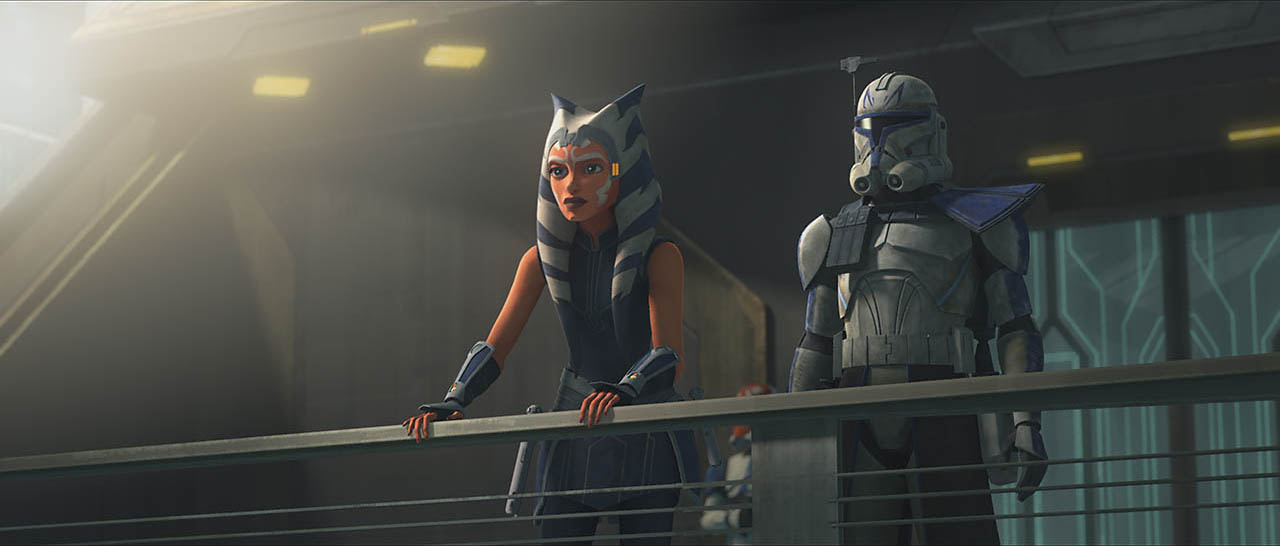
We’re only halfway through the final arc of The Clone Wars, and I have to agree with Ashley Eckstein, Ashoka’s voice actor. The Siege of Mandalore is already one of the best stories in Star Wars history! Last week saw the start of the fabled Siege of Mandalore start with a fight worthy of being on the big screen. Ashoka, Rex and the Clones, and the Mandalorians all worked to free Mandalore from ex-Sith Lord Darth Maul, and we got to see how far the former Padawan’s come. However, as epic as it was, we cannot overlook the coming storm gathering in the distance. And in this episode, Maul makes things clear: it’s time to be afraid.
Hide from the Coming Storm

When I was a kid, I thought that Darth Maul was one of the scariest guys you could meet. Ergo, if there’s something out there that’s enough to scare him, then everyone should be afraid. As the episode establishes in its opening minutes, the ex-Sith knows what’s happening in the background. He may be the only one in the show that’s aware of the coming storm that is Revenge of the Sith. And he doesn’t want to be around when that happens.
As a result, Maul spends the episode focused on getting off the grid. He kills anyone who could rat him, orders the Shadow Collective to go into hiding, and throws the Mandalorians out as decoys while he gets off-planet. But before he does, he can’t resist trying to make one last jab at Kenobi and Darth Sidious. He was hoping that not only Kenobi would come after him, but also Skywalker, so he could kill both.
Skywalker is the Key
At first, I was confused as to why Maul would want Anakin dead. Then it all clicked. In the episode’s climax, Maul tells Ashoka the cold truth: Anakin Skywalker is the key to all of Darth Sidious’ plans. Maul figured out that Sidious has been grooming Anakin to become his apprentice since day one. So he decided to rob his former master of that satisfaction by killing him.
This moment was the lynchpin to the whole episode for me. The events of Revenge of the Sith were hanging over the entire episode like a sword about to fall. We know what’s coming, but can’t do anything to stop the coming storm, and it gives the episode a sense of genuine dread. What’s the worst part, though? Ashoka doesn’t believe Maul.
This moment only makes Anakin’s fall even more tragic. Had Ashoka believed Maul, she could have warned Anakin or Obi-Wan of Sidious’ plans. It could have stopped everything before it started. Tragically, it’s Ashoka’s faith in her master that costs her this one chance to save him before its too late.
A New Duel of the Fates

I’ve always thought that if the Jedi never fell, Ashoka would be sitting on the Jedi Council by the time of Rebels. So far, the Siege of Mandalore has vindicated these thoughts for me, with Ashoka facing off against Maul in the Sundari Royal Palace.
The duel between the former apprentices strikes a perfect balance with all the duels in the films. It blends the emotional intensity of the original films with the speed and acrobatics of the prequels. There’s even a hint of the desperation found in the sequel duels. This is peak lightsaber dueling in Star Wars, and we get to see Ashoka largely in control of the fight. Thanks to some help from Rex and the Clones, Maul’s finally captured. It’s small comfort, though.
Day of Reckoning Almost Here
We’re only halfway through the Siege of Mandalore, and I’m already counting it as one of the best arcs in the show’s history. It’s also going to be one of the most tragic stories in Star Wars history. Early in the episode, Ashoka talks to Obi-Wan, who informs her that Anakin killed Dooku and his departure for Utapau. Judging by the film’s timeline, there’s only a few hours left before Order 66 begins and the birth of the Empire.
In my opinion, this episode hammered home how pointless the Clone Wars really are. An entire galaxy devastated and divided by war, courtesy of Darth Sidious. We hate how he’s going to win, and aside from Maul, no one else realizes it. While we know that Ashoka, Bo-Katan, and Rex live to see another day, this isn’t going to make what’s to come any less heartbreaking.
I love it when shows end with a bang, and it looks like Star Wars: The Clone Wars is going to end on the biggest bang possible. As the coming storm prepares to engulf the galaxy, I’m going to keep a box of tissues handy for the next two Fridays. Tears will be shed.
I Give “The Phantom Apprentice” a 5/5
Stray Observations
- During the whole episode, it felt like Maul was acting like the only one who’s in on the big joke. If it weren’t so tragic, seeing Darth Sidious play an entire galaxy would be hilarious.
- Maul wouldn’t last five seconds if Anakin had shown up.
- I got the title for this post from Tartakovsky’s series Star Wars: Clone Wars. Watch it on YouTube.
Click here for some of my Star Wars stuff.
Click here to see my other animation stuff.
The End of the Clone Wars is Near
Star Wars: The Clone Wars Season 7, Episode 9 Review
To quote from Tony Stark, “part of the journey is the end.” Star Wars fans knew going into The Clone Wars what to expect, how this story would end. Anakin’s transformation into Darth Vader; the Jedi forced into hiding, and the victory of the Sith. Now, after all these years of waiting, we’re in the final arc of The Clone Wars, the Siege of Mandalore. And by the Force, is it beautiful.
Bittersweet Reunions and Farewells

In the last episode, Bo-Katan recruited Ashoka to help her liberate Mandalore from ex-Sith Lord Maul. If you’ve seen Rebels or read the Ashoka novel, then you know what happens next. Ashoka and Rex lead part of the 501st to capture Maul, but then Sidious launches Order 66. The end result is Ashoka and Rex going into hiding while Maul escapes. Had the show finished its run on Cartoon Network, then we’d have the fortune of not knowing what happens next. And the fortune of surprise. Knowing what happens doesn’t make what this episode any less emotional.
Seeing Ashoka reunite with Anakin, Obi-Wan, Artoo, and Rex is a bittersweet moment. It’s the last time we’ll ever see the five of them together in one place. Mid-episode, Anakin and Obi-Wan have to return to Coruscant to rescue Palpatine, kicking off Revenge of the Sith. Knowing that this is the last time Ashoka will see her master as a friend, and likely the last time she sees Obi-Wan at all, brought tears to my eyes. So many things unsaid, unresolved.
The real gut punch comes from the best characters in the show: the Clones themselves. Even after Ashoka left, they salute her and call her “Commander” out of respect for their comrade. Rex and his company even paint their helmets to mimic her facial markings. The message is clear: they’re loyal to Ashoka. Which only makes what’s to come even harder.
How Far Ashoka’s Come
When the Siege of Mandalore finally begins, it’s a masterpiece. Mandalorians and Clone Troopers donning jet packs, dueling in the skies of Mandalore and in the streets of the capital. It’s enough to make fans of the franchise giddy with excitement!
At the heart of everything, though, is Ashoka, and she kicks ass! As the final act of the show, the Siege of Mandalore showcases how much Ashoka’s grown. As the battle begins, she confidently jumps into the sky and effortlessly makes her way to the ground, taking out enemies as she goes. I always thought she had the potential to be one of the best of the Jedi, and this basically affirms it. Our little Padawan’s all grown up. Is it any wonder we can’t wait to see her in season two of The Mandalorian?
Maul Appears, Final Battle Begins
The one flaw to this episode is the lack of one key player: Maul himself. We know he’s hiding on Mandalore, but we don’t see him until the final moments of the episode. It’s a letdown, but I think it helps to build up the tension.
With only three episodes left in the series, there’s still plenty of time for action and drama. After stumbling through the “Ashoka Alone” arc, this episode gives me hope that The Clone Wars can end on a high note. I can’t wait for next Friday as the Siege of Mandalore continues!
I Give “Old Friends Not Forgotten” a 5/5
Stray Observation
I would like to point out that this episode doesn’t dispute the events of the Battle of Coruscant that were depicted in Tartakovsky’s Star Wars: Clone Wars mini-series. Ergo, it’s still canon to me.
Click here for some of my Star Wars stuff.
Click here to see my other animation stuff.
A Gray Galaxy, It Is for Ashoka Now
Star Wars: The Clone Wars Season 7, Episode 6 Review
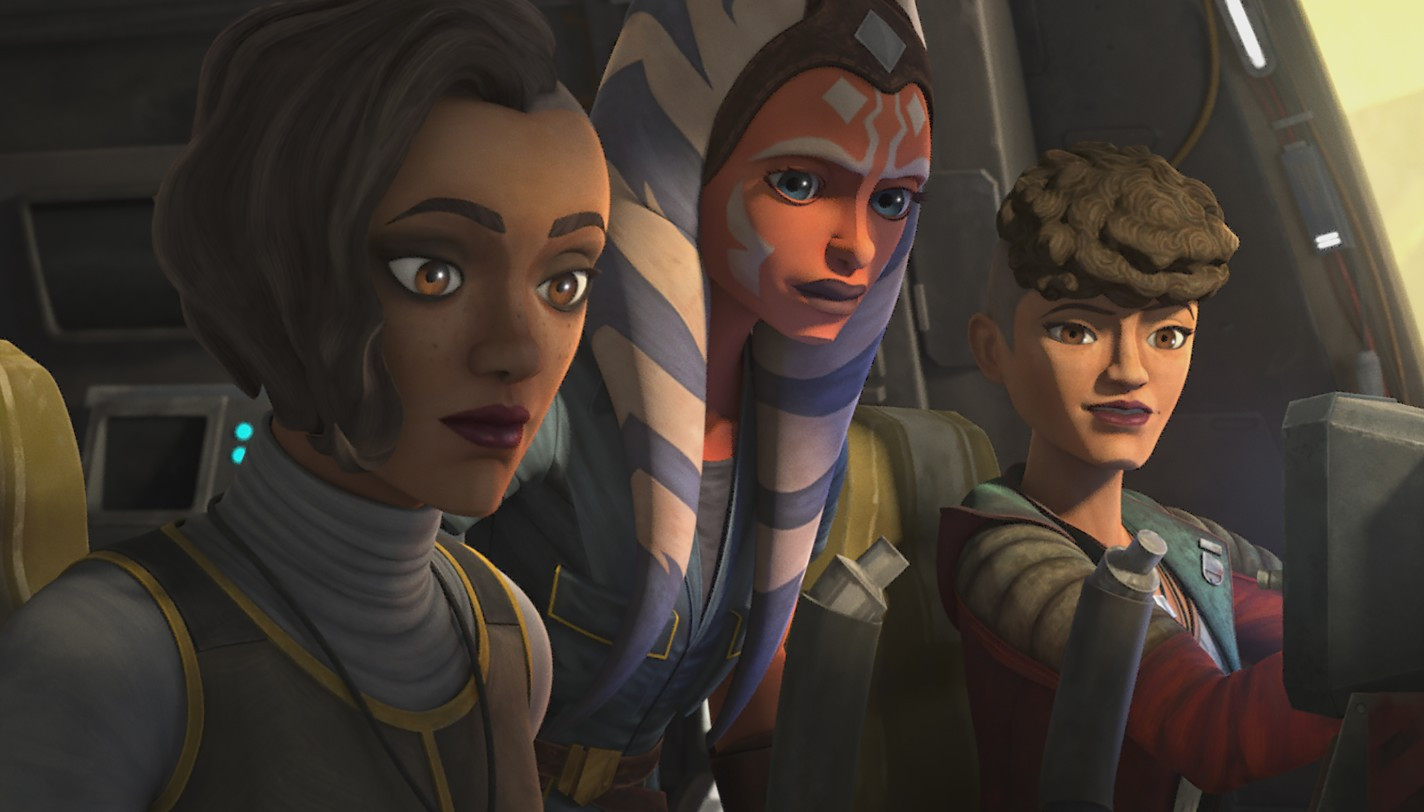
You’d think that an arc that brings back one of The Clone Wars breakout characters would hit the ground running. Last week, our first look at Ashoka post-Jedi crashed; quite literally, too. She crashes in front of the shop of two young sisters trying to get out of their shady life. As a result of their meeting, Ashoka gets a dose of how life’s not black-and-white like the Jedi say. Sometimes, it can be a gray galaxy, and Ashoka has to adapt to it.
A Simple Job

“Deal or No Deal” starts with Ashoka tagging along with the Martez sisters for a simple job that promises to make a lot of money. She wants to make sure they stay out of trouble out of the goodness of her heart, but the cynical Rafa think she has “an angle.”
This is a classic example of cynicism vs. idealism. Ashoka’s been raised with the strong moral code of the Jedi, so she tries to hang onto that as much as possible. Having been shaped by her tough life, Rafa doesn’t care as much about morals, only surviving. It’s a gray galaxy they have to live in. As a result, these two end up becoming the little angel and devil on Trace’s shoulder during the episode. Too bad neither of them can do what’s best for the trio.
Worse, it turns out that Rafa’s “big job” is delivering spice for the King of Kessel to the Pyke Syndicate.
Kessel Spice Run and Gray
I remember Kessel from the Expanded Universe: a misshapen asteroid that barely had an atomsphere. Anyone who got sent to the dark spice mines had little chance to escape. While it looks like an actual planet now, complete with greenery, I saw through it. It’s a gilded world of corrupt elites and abused slaves.
One would think that Kessel’s the kind of place the Jedi would want shut down. However, it’s Ashoka’s turn to be cynical about the matter. When Rafa remarks that the Republic would shut the operations on Kessel down if they knew, Ashoka can only scoff and say “you’d think they would.” It’s sad, but also reassuring to know that she’s not as naive as some Jedi. Yet she still tries to live up to their morals, as she tries to talk Trace out of delivering the spice.
So, Trace dumps it all, which was the absolute dumbest thing she could have done.
Ashoka in a Gray Galaxy
The whole point of this arc is to show Ashoka adjusting to living in a morally gray galaxy. It will help her to survive until her return in Rebels years later. As a result, she has to learn to balance between her morals and what’s necessary.
Case in point, when the three have to deliver the absent spice to the Pyke’s, Ashoka resorts to using a Force Mind Trick on their leader to get the credits. The Jedi Council would reprimand her for doing such a thing. However, given the circumstances, a lot of people would do the same thing. Heck, I pulled similar stunts while playing Knights of the Old Republic. Still not sorry!
Fortunately, Ashoka remembers enough of her Jedi past to keep herself from falling down a slippery slope; or at least of what Anakin taught her. Speaking of whom, we get a touching scene near the start of the episode that shows how Anakin still cares about his former Padawan.
When Trace accidentally flies her ship into a military lane, Admiral Yularen’s ready to arrest them. However, Anakin senses that Ahsoka’s on board, and and she senses him in turn. In a moment that mirrors what will happen between him and his son Luke in Return of the Jedi, Anakin lets them go. Yet another example of how Anakin may be more of a Jedi than most Jedi. Which only makes his fate all the more tragic.
How will Ashoka Get out of This
By the end of the episode, Ahsoka, Trace, and Rafa have all screwed up. As a result, the Pyke Syndicate takes them prisoner. However, we all know that Ashoka will get out of this situation intact. the Martez sisters, though, may not.
This episode was a step up the previous episode, and I am looking forward to seeing how it turns out for Ashoka. This is one step on her way to becoming the badass leader she is in Rebels, and I can’t wait to see what happens next.
I Give “Deal or No Deal” a 4/5
Click here for some of my Star Wars stuff.
Click here to see my other animation stuff.
Echo’s Unfinished Business
Star Wars: The Clone Wars Season 7, Episode 4 Review
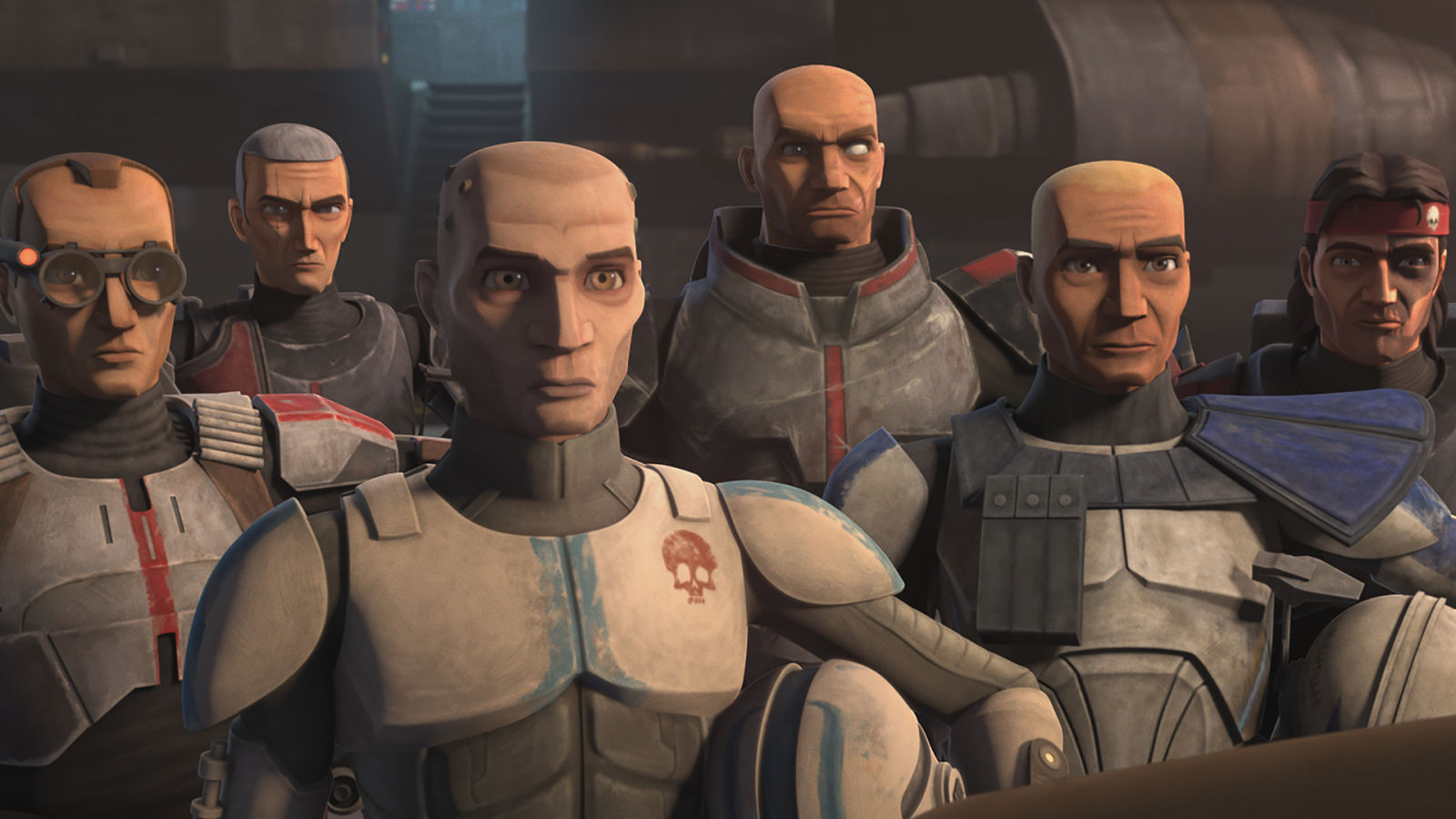
Of all the Clones we’ve come to know during Star Wars: The Clone Wars, few have stood out as much as Domino Squad. As this FANDOM Article puts it, this quintet of Clone Troopers was abnormally quirky. Once they stepped up, though, they seemed like they would accomplish great things, and several of them did. Then one by one, they all died. However, the final season opened with the reveal that Echo was alive. Thanks to the Bad Batch, Rex, and Anakin, they rescued him from being used as a living computer. However, Echo has unfinished business with the Separatists, and regarding his future.
In a last-ditch attempt to retake Anaxes, Echo decides to use his cybernetics to mess with the droids. So they take Anakin, Rex, and the Bad Batch Squad to sneak aboard Admiral Trench’s ship to do just that.
Now, Tom Kane’s opening narration leaves us with the interesting question of whether Echo can still be trusted. Could years of captivity led to brainwashing by the Separatists? Considering how his comrades accidentally left him behind, it would be understandable for him to hold a grudge. However, I knew from the get go that Echo was going to stay loyal to his brothers, even if the Bad Batch didn’t feel the same. It also makes for unnecessary drama in the scheme of the episode.
Jedi Are Awesome and Anakin Channels his Vader
The real drama, though, comes in the form of Obi-Wan and Mace Windu’s attack on the main Separatist facility. Mace, in particular, gets a chance to show off how much of a badass he is. In a moment that would make Samuel L. Jackson proud, Mace’s voice actor gives the following speech to the battle droids.
They should have taken the offer.
However, the main drama this episode came from Anakin himself, who’s gotten a backseat most of this season. We’re only a few months away from Revenge of the Sith, and Anakin’s transformation into Darth Vader. However, the Clone Wars and other materials have shown us that his turn wasn’t sudden. We’ve seen Anakin give in to his dark side several times in the show’s run, but “Unfinished Business” gave us his most Vader-esque moment yet. When he corners Trench on the bridge to get the codes to disarm a bomb, he makes it clear he’ll kill the enemy commander if he refuses; and he does! Granted, Trench tried to attack him, so it was self defense. Still, it was very unsettling to see him do this.
I said in another post that one of the Jedi’s biggest failures was their inability to truly help Anakin, and as we see in this episode, he needs help. He’s been fighting a war for three years and has lost so many friends and loved ones to it. As a result, he became protective of those he had left to the point he’d kill in cold blood. It’s part of the reason why he becomes Vader, and we’re already seeing what he’s going to become in just a few short months. It’s a sad sight, a truly sad sight.
The Future of Echo?
In the end, Echo is able to help the Republic retake Anaxes, and is promised medals and praise coming his way. However, and I wish they had explored this more, Echo realizes that he may not have a place in the regular Clone Army anymore. His cybernetics, while useful, won’t exactly help him in the heat of battle. In addition, while he has Rex, the rest of Domino Squad, his brothers, his family, is dead.
Thankfully, that’s where the Bad Batch comes in. Domino Squad was always quirky and one step away from being ‘defectives’. the Bad Batch could have ended up like them had things gone differently with their genetics. So, after admitting they were wrong to doubt him, the group offers Echo a place with them, which he accepts.
I’m happy about this end to the Bad Batch arc of The Clone Wars for two reasons. Firstly, it’s bringing Echo’s story full circle in a way. He lost his old family in Domino Squad, but now has a new one in the Bad Batch where he’ll fit right in. Secondly, it leaves the door open for future writers to tell more stories about Echo and his new comrades. What happens to them after the rise of the Empire, and what sort of things do they do? So much potential to be had!
However, I think the show’s ending this arc at the best possible time. I want to see Ashoka’s story continue next!
I Give “Unfinished Business” a 4.5/5
By the way, I loved Wrecker in this episode. “This is the happiest day of my life!”
Click here for some of my Star Wars stuff.
Click here to see my other animation stuff.
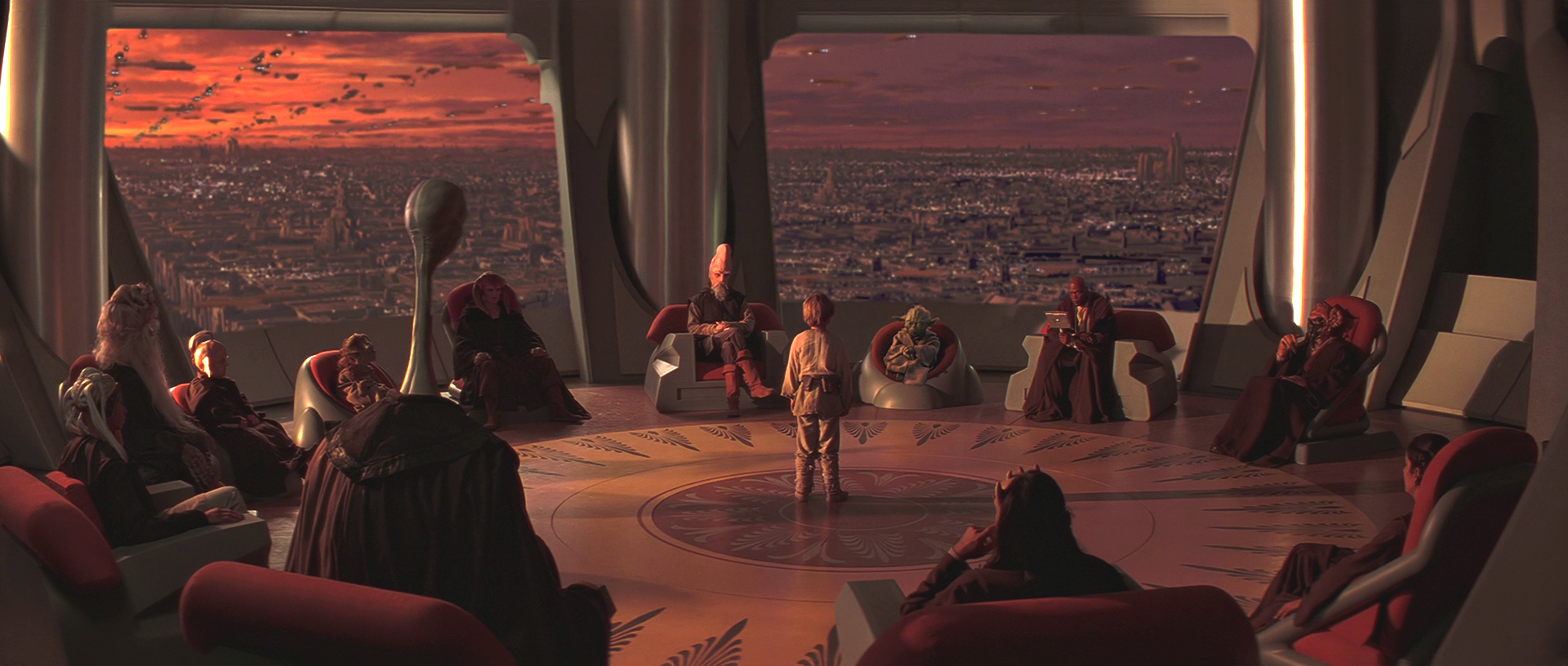
The Mistakes of the Jedi
I Call out the Jedi Order On Their Mistakes
For forty-two years, the Jedi Knights have been some of the greatest paragons of good in pop culture. Wielding the power of the Force and armed with their lightsabers, they’re symbols of peace and good. However, once you’ve been into the franchise long enough, you see that the Jedi aren’t perfect. In fact, they can be just as bad as the Sith and dark siders they fight.
With the Rise of Skywalker out on Friday, and the future of the Jedi uncertain, I think now’s a good time to look at the flaws this group has. In addition, I’ll be providing examples of mistakes they’ve made in Star Wars, both in the new canon and Expanded Universe. Just because I love them doesn’t mean I can’t call them out on their nonsense.
No Blaster Training

This is more of a nitpick than an actual flaw the Jedi have. In a Galaxy where almost everyone has access to energy based firearms, the Jedi rely on the Force and their lightsabers for defense. Normally, that’s all they need, but even that can fail them.
Normally, the Jedi don’t use blasters because they see them as clumsy and, more often than not, lethal. Meanwhile, a lightsaber is methodical and doesn’t necessarily kill a person when used. Thus, they see it as an elegant weapon from a more civilized time. Here’s what I have to say to that:
Once the Empire rose, the last thing a Jedi would want to do is use a lightsaber in public. Therefore, blasters become a preferred option for Jedi trying not to draw attention.
Personally, I fail to see why the Jedi didn’t integrate blasters alongside lightsabers. Firstly, most, if not all blasters, have a stun setting so they can be non-lethal. Secondly, with the use of the Force, a Jedi will likely be far more accurate with their shots, to the point where can deliver non-lethal hits. In the Expanded Universe, there are several cases in which someone draws on the Force to deliver incredibly accurate and deadly shots. If the majority of Jedi trained with ranged weaponry, they could be deadlier than even the most skilled non-Force users. Finally , I think watching a Jedi dual-wield a lightsaber and blaster would incredibly badass.
Choose to Avoid their Emotions
Part of the Jedi’s code is to avoid using their emotions. They see it as means to cloud their judgement, and that negative emotions like fear and anger can lead to the Dark Side. As a result, the Jedi are seen as paragons of fairness and ideal as mediators and judges.
Unfortunately, there’s a flaw in choosing to avoid one’s emotions: not everyone’s capable of doing that. In fact, given how their job involves getting involved in potentially life-threatening and traumatic experiences, not dealing with one’s feelings can be a bad thing. Worse still, because the Jedi see emotion as a potentially bad thing, they have no way to help members who clearly need emotional support.
Take Anakin Skywalker, for example. He always felt guilty for leaving his Mom in slaver, something most Jedi had a hard time understanding. So when he started having nightmares about his Mom in trouble, their advice was to “be mindful of your thoughts”. That was a mistake, as Shmi Skywalker was in great danger, and ended up dying in his son’s arms. As a result of that traumatic experience, Anakin lost himself in his rage and killed the entire village of Tusken Raiders, even the non-combatants. Afterwards, he never told anyone outside of Padme and Palpatine, the latter of whom would use the knowledge to force further to the Dark Side. He kept the anger and guilt bottled up because he knew that the Jedi would refuse to forgive him.
I won’t condone what Anakin did, but I think many of us understand how traumatic the experience was for him. The Jedi wouldn’t have been able to, and that anger, guilt, and fear festered and helped push him to the dark side. The best thing the Jedi could have done was reach out not with horror, but with sympathy and understanding. Me? I would have been horrified at first, but would understand how much Anakin was suffering and that pushing him away would do more harm than good. In that moment, what Anakin really needed was a friend that understood why he did it and would help him atone for his actions.
Forbidding Attachments
Piggybacking off what I said above, because the Jedi are paranoid about emotions leading to the Dark Side, the idea of emotional attachments is frowned upon and forbidden. They see it as a potential weakness and fear that it will lead a Jedi to forsake their duty if it meant rescuing someone they loved. In my honest opinion, though, I think the whole thing’s poodoo.
Yes, people can make rash decisions when our loved ones are on the line. That said, most of the Jedi fail to realize that bonds between loved ones does more good than harm. Love is one of the most positive emotions that a sentient being can feel, be it love for a friend, a family member, or partner. That love can, in turn, serve as an anchor to keep a Jedi from falling to the Dark Side. Both in canon and in the Expanded Universe, love has actually helped several Jedi come back from the darkness.
I think the problem isn’t necessarily attachments. I think the true problem is that Jedi don’t know how to deal with pain and loss, and thus they embrace their inner darkness. In the Expanded Universe, Luke Skywalker recognizes this mistake of the old Jedi Order. Given his own experiences with the redemptive power of love and attachment, Luke thus allowed the New Jedi Order to marry and raise families. Hopefully, Rey or someone else will do the same if they rebuild the Jedi.
Believing Those Fell to the Dark Side were Iredeemable

In the original trilogy, both Obi-Wan and Yoda told Luke that trying to bring his father back from the darkness was impossible. This attitude was a reflection of the Jedi’s deeply entrenched belief that the Dark Side was something to be destroyed on sight. As a result, they saw anyone who fell into its grasp as beyond saving and must be destroyed. Yet as we saw, Luke proved them both wrong when Anakin chose to save his son’s life.
Looking back on the films, I realize that Obi-Wan and Yoda gave up on Anakin too easily. As is often the case in real life, anyone is capable of changing for the better. They need only be willing to let that happen. While Anakin remains the best example, Star Wars is filled with examples of Jedi who fell to the Dark Side but redeemed themselves. In other words, that whole “forever will it dominate your destiny” stuff is bantha poodoo. Not even Yoda knows everything.
We Still Need the Jedi
I could going about all the screw-ups the Jedi have made, both in the EU and in Disney’s canon, but I think you got the picture. The Jedi Order was a flawed organization that messed up a lot. From a certain point of view, you can see why Luke thought the Jedi had to end with him.
Here’s what I have to say: screw that.
The Jedi aren’t perfect. They let the Sith rise to power, they had no idea how to handle negative emotions, and they thought love was the root of evil. That doesn’t change the fact that when they were doing what they’re supposed to and helping others, they did a great job. The Galaxy saw them as symbols of justice and hope. No matter what Luke may have thought of them in The Last Jedi, that doesn’t change the fact that the Galaxy needed the Jedi to come back. As long as there are jerks who want to use the Force to bully others, the Jedi need to be there.
In other words, I hope that The Rise of Skywalker sees Rey do what should have been done a long time ago: bring back the Jedi.
Click here to learn all there is about Star Wars with Wookiepedia, the Star Wars Wiki.
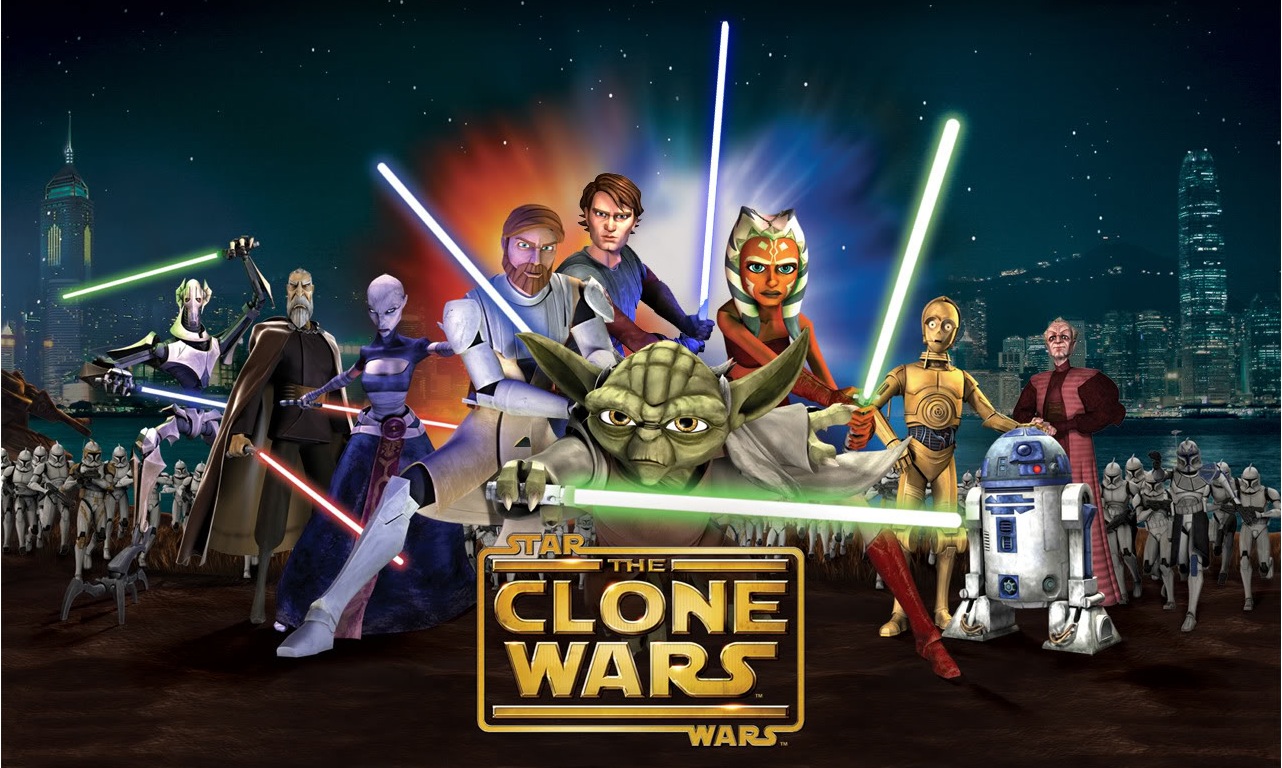
The Clone Wars Were Awesome
My Top Seven Favorite Arcs Of Star Wars: The Clone Wars
Right when we thought Star Wars couldn’t get any better, we got Star Wars: The Clone Wars. Airing from 2008 to 2013 on Cartoon Network, The Clone Wars became an immense hit with fans, myself included. Even the people who hate the Prequels have to admit this show was good. As a bonus, it marked the debut of Dave Filoni in the Star Wars franchise. Ten years later, and people now consider him George Lucas’ apprentice and heir.
With The Rise of Skywalker out in a few weeks, and the final season of The Clone Wars coming to Disney+ in 2020, now is the to strike. Now is the time for me to look back on my favorite stories from Star Wars: The Clone Wars. Two things, though: this will be about story arcs which span several episodes. I’ll be doing my favorite episodes of the show at a later date. Secondly, there’s going to be spoilers ahead. If you haven’t seen it, go watch it on Disney+.
The Malevolence Arc

The very first arc of The Clone Wars, The Malevolence Arc started the show with a bang. In this three episode story, the Jedi face down against General Grevious’ deadly new flagship, the titular Malevolence. Aside from absolutely massive, what made the Malevolence so terrifying was its twin Ion Cannons that could shut down any ship. In a tribute to the original trilogy, the firing sequence of said cannon’s copied the Death Star’s firing sequence.
What some people may not realize is that this arc and the Malevolence were based on the real-life battleship, the Bismarck. This Nazi warship had the potential to turn the tide of World War II in the Atlantic. As a result, the British threw everything they had into hunting it down. Like the Malevolence, the Bismarck was crippled by a small group of bombers before ultimately being sunk. However, seeing the Malevolence crash into a moon looks cooler.
The Zillo Beast
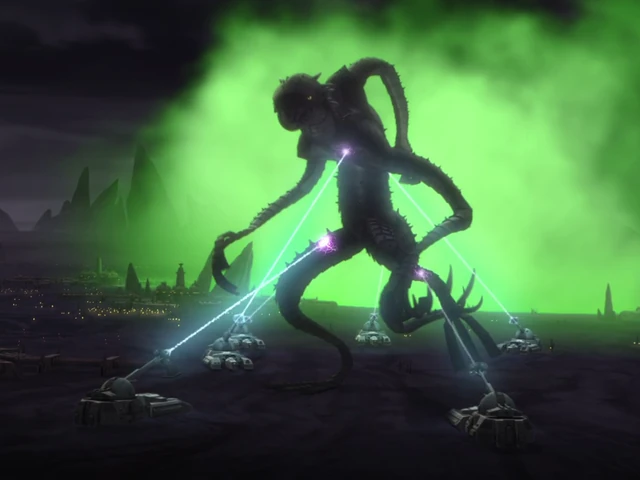
When the Republic tries to test its new droid-destroying bomb, they wake something up. That “something” is a nigh-invincible called the Zillo Beast, and its armor’s so thick not even lightsabers can cut through it. As a result of this revelation, Palpatine orders it captured and brought to Coruscant. Predictably, it gets loose and starts killing everything; which I called, by the way.
When I first saw the Zillo Beast in The Clone Wars, I knew where the show was going: a Kaiju story. However, with the plot and themes, I thought it was more like King Kong than Godzilla. The end result was still epic in scope though. Even if thousands of Coruscanti died as a result, it felt a little cathartic to see Palpatine/Darth Sidious genuinely afraid. I actually hoped the Zillo Beast ate him.
The Nightsisters Trilogy
As Dooku’s best assassin, Asajj Ventress, continued to grow in strength, Darth Sidious saw her as a threat to him. As such, he ordered Dooku to leave her to die to prove his loyalty. Unbeknownst to all, Ventress survived and returned to her homeworld of Dathomir. There, she plotted with her fellow Nightsisters to take revenge on Dooku. This, in turn, would lead to the birth of a powerful new enemy, and hinted at the return of an old one.
Dathomir and the Nightsisters were first introduced in the Expanded Universe content as a group of powerful dark side users. Seeing them get focus in The Clone Wars was an absolute joy to see. It also marked a big change to the show’s status quo, as Ventress went from outright villain to cool anti-hero and the introduction of recurring villain Savage Oppress, voiced by the great Clancy Brown. In the long run, it laid the foundations for the return of one of Star Wars best villains.
The Mortis Arc
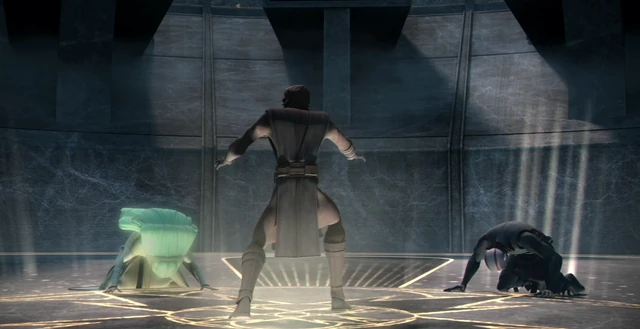
On a mission to investigate a distress beacon, Anakin, Obi-Wan, and Ashoka wind up on the mysterious planet known as Mortis. There, they encounter a family of Force-users so powerful, they’re essentially the embodiment of the different aspects of the Force. The time that the three spend on Mortis with these three beings ends up changing how we view the Force itself.
Unlike much of The Clone Wars, which dealt with the war and its effects on the Star Wars Galaxy, the Mortis Arc’s unique. It deals with the spiritual aspects of Star Wars: the purpose of the Chosen One and the different aspects of the Force. It’s been years since these episodes, and I still don’t think we fully understand the ramifications of what happened.
Aside from dealing with the Force, this arc also saw cameos of deceased characters Qui-Gon Jinn and Shmi Skywalker. The show even got Liam Neeson and Pernilla August to reprise their roles.
The Mon Cala Arc
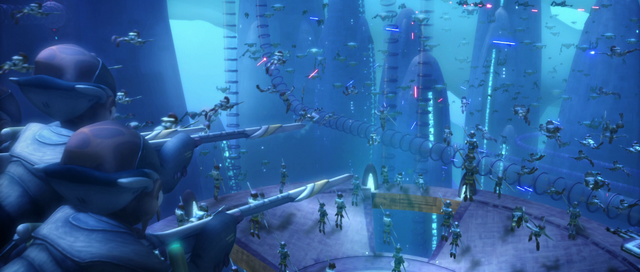
Season Four of The Clone Wars may have been its best overall, as it includes my last three picks on this list. In the three-part opening to Season Four, Anakin, Ashoka, and Padme travel to Mon Calamari to aid in its planets civil war over the planet’s throne. On one side is the Mon Cala and the young Prince Lee-Char against the Separatist-backed Quarren. However, Dooku has no plans on giving the planet to the Quarrens.
Aside from reminding me of the stories of The Lion King and Hamlet, I love this arc for several reasons. Firstly, the battle in the premiere episode involved thousands of characters and animals, and that’s an impressive feat of animation. Secondly, it gave us a look at Ackbar, the future Rebel Admiral that uttered this legendary phrase: “It’s a trap!” Seeing Ackbar fighting alongside the Jedi in his younger years was enough to make fans squeal with joy. Third and finally, and I didn’t learn this until years later, it served as my introduction to Adam McArthur. Providing the voice to Prince Lee-Char, Adam would go on to play the role of Marco Diaz in Star vs. The Forces of Evil.
Darkness on Umbara Arc
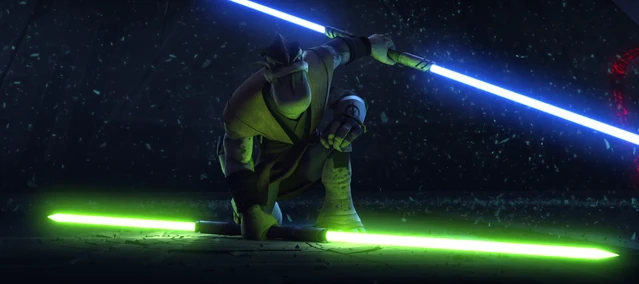
As The Clone Wars progressed, I noticed that the show was getting progressively darker and grittier, and I consider the Umbara Arc one of the darkest stories in the show. That is both metaphorically, and very literally. When the Republic launches an invasion of the darkened world of Umbara, Anakin’s recalled to Coruscant. Meanwhile, his Clone Troopers are placed under the command of Jedi Pong Krell, who proves to be a terrible leader! His strategies are so bad, that’s it’s almost like he’s trying to lose.
Underneath the Sci-Fi technology, I think that the Umbara Arc was the closest The Clone Wars got to a big budget war film. Whereas much of the show focused on the Jedi or leaders of both sides, this arc focused exclusively on the Clone Troopers. Characters like Captain Rex and Fives had done wonders for humanizing the Clone Troopers. However, seeing the Clones chafe under Krell’s seeming incompetence reinforced the idea that they were still people. I shared their frustration at Krell’s poor plans, and when Krell’s true alliegance came to light, I felt my rage boil over. In my eyes, making a viewer or reader feel great emotion is the sign of a great story, and Umbara was one.
Return of Maul Arc
After disappearing for the rest of Season Three and most of Season Four, the four part finale to Season saw us return to Savage Opress and Asajj Ventress. Left without a home and no one else to trust, both end up on the run from the Republic and Separatists. While Ventress eventually builds a new life as a bounty hunter, Savage goes searching for his lost brother. As a result, we see the return of one of Star Wars best villains, Darth Maul.
SAY WHAT?
When I first saw The Phantom Menace years ago, I thought that Darth Maul was one of the scariest things I’ve ever seen. Seeing Kenobi slice him in half remains one of my favorite moments from the Prequel Trilogy. So when The Clone Wars brought him back to get revenge on Obi-Wan, I went crazy with excitement. He was every bit as scary as I remembered him. Maul went on to become a recurring villain in The Clone Wars and its successor, Star Wars: Rebels. Thank you, Dave Filoni and everyone else!
May the Force Be With You
Without a doubt, Star Wars: The Clone Wars was one of the best things the franchise has ever given us. Every time a new episode came on, I’d stand in front of the TV and swing my old toy light saber to the opening credits and I had a blast. With the Skywalker Saga seemingly about to end, I’m glad I got to look back on this amazing addition to the Star Wars mythos. Now, though, I have to ask all of you: what was your favorite story from The Clone Wars? Let me know in the comments. May the Force be with you!
Click here for some of my Star Wars stuff.
Putting the “Pop” in Pop Culture!

Community